
Single Again
Play Single Again
Single Again Screenshots



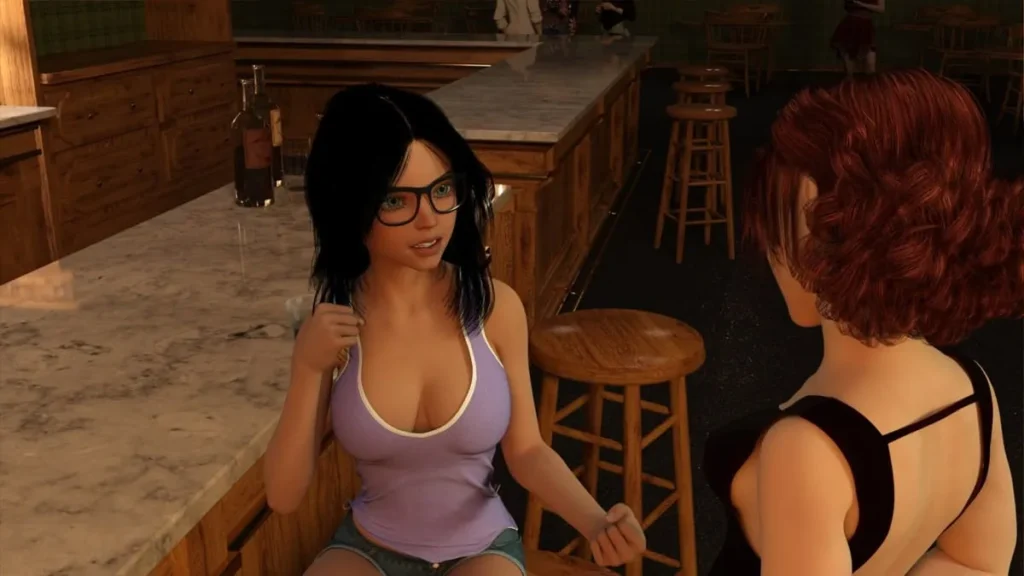




Single Again review
Master every choice, unlock all scenes, and navigate the narrative-driven experience
Single Again is a choice-based narrative game that puts you in control of the story’s direction. Every decision you make—from simple greetings to major life choices—shapes how characters interact with you and which scenes unlock. Whether you’re looking to discover all available content, understand how the choice system works, or find the optimal path through the game, this guide covers everything you need to know. The game features multiple branching storylines, character-specific interactions, and hidden scenes that reward careful decision-making. Understanding the mechanics behind each choice will help you experience everything the game has to offer.
Understanding the Choice System and Mechanics
Ever feel like you’re just clicking through a visual novel, hoping for the best, only to end up with an ending that feels totally unsatisfying? 😩 I’ve been there. The first time I played Single Again, I treated it like any other story game. I picked dialogue options that seemed funny, hugged who I wanted, and basically winged it. Let’s just say my character spent a lot of lonely nights wondering where it all went wrong. I missed entire character arcs and triggered a “game over” scenario before the first week was done! 🤦♂️
That’s because Single Again isn’t just a story you read—it’s a delicate ecosystem of emotions and consequences. Every choice is a pebble tossed into a pond, and the ripples touch every character and every scene to come. To truly master this narrative-driven experience, you need to understand its engine. This chapter is your blueprint to the Single Again choice system and the intricate narrative branching mechanics that make it so uniquely rewarding.
How Choices Impact Your Story
At its heart, Single Again is a game about rebuilding your life and connections after a breakup. The Single Again choice system is the tool you use to sculpt that new life. It’s deceptively simple on the surface: you pick what to say, decide who to spend time with, and choose when to offer or accept comfort. But beneath that, the game is constantly tracking, calculating, and weaving your decisions into a bespoke narrative tapestry.
Think of it like this: your relationships with characters like Iris, Sarah, and Emma aren’t governed by a single “like” meter. Instead, the game uses a sophisticated character relationship tracking model. Every interaction is a data point. A supportive comment here, a shared joke there, or a comforting hug—they all accumulate invisibly. This isn’t just about making someone “like” you more; it’s about defining the nature of your relationship. Are you becoming Iris’s confident rock, or are you slipping into a more flirtatious dynamic? The game knows.
🎯 Pro Tip: The game’s calendar is your best friend. Major story junctions often occur at week’s end. Your aggregate choices up to that point will determine which doors open and which slam shut forever.
These choices cascade. An early decision to open up to one character about your past might make them more receptive to you later, unlocking a deeper conversation branch that was previously walled off. Conversely, brushing off someone’s concerns in Chapter 2 might mean they don’t come to you with crucial information in Chapter 4. This is the essence of narrative branching mechanics—your path is never linear. You are constantly funneled down lanes based on your prior behavior.
And yes, your choices can lead to a premature conclusion. Make consistently selfish or dismissive choices, and the narrative will logically reflect that your character hasn’t grown or forged the necessary bonds to move forward. It’s a “game over” that feels earned, not cheap. To avoid this, always consider the emotional logic of your avatar and the people around them.
To visualize how this works in practice, let’s look at a concrete example from early in the game. Your response to a single, seemingly minor event can set you on wildly different story paths and endings.
| Scenario (Friday Lunch) | Your Key Dialogue Choice | Immediate Consequence | Long-Term Narrative Branch |
|---|---|---|---|
| Sarah mentions her stressful work project. | “That sounds tough. Want to talk about it?” | +Sarah Rapport. Unlocks an optional after-work coffee invite later that day. | Opens the “Supportive Colleague” path with Sarah, leading to scenes where she seeks your advice on career and life. |
| Sarah mentions her stressful work project. | “Everyone’s busy, I guess.” *Shrug* | Neutral/Slightly Negative Sarah Rapport. The coffee invite does not appear. | Keeps the relationship cordial but surface-level. May lock out a key scene where she defends you to others. |
| Sarah mentions her stressful work project. | “Maybe you’re just not managing your time well.” | Significant Negative Sarah Rapport. She becomes visibly cold. | Can completely close Sarah’s primary route. May influence how *other* characters perceive you based on her account. |
See how that works? 😲 A single lunch conversation isn’t just about that moment. It’s a fork in the road. The dialogue options guide isn’t about finding a “correct” answer, but understanding the emotional language of the game. Kindness and engagement are usually currency, but sometimes a character needs a firm truth, not a gentle lie. Learning that distinction is key.
Unlocking Extra Scenes and Hidden Content
This is where Single Again truly shines and rewards the attentive player. The game is packed with secret moments, alternative interactions, and bonus scenes that you will never see on a single playthrough. The key to how to unlock hidden content is intimately tied to the character relationship tracking we just discussed.
Think of each character’s “rapport” as a key. As you reach certain thresholds of connection and trust, new doors become available. These aren’t always marked with flashing icons; they emerge organically in the narrative. For instance, reaching a high enough rapport with Iris might mean that after a group event, you get an extra, private scene where she shares a personal memory. Low rapport, and that scene simply doesn’t exist in your version of the story.
The most significant unlock gates often occur at the end of key days, like Friday, March 31st. The game takes a snapshot of your standing with everyone. Did you build a strong enough bond with at least one person? Did you explore multiple connections or focus intently on one? Your answers determine which extra scenes you unlock for the weekend—a special hangout, a heartfelt confession, or perhaps a lonely evening reflecting on missed opportunities.
Here’s a personal story: On my first, disastrous playthrough, I spread my attention too thin and ended Friday with lukewarm relationships across the board. My weekend was generic and short. On my next try, I focused on being consistently supportive to Emma, remembering her small mentions of favorite books and music. Come Friday night, I unlocked a beautiful, hidden scene of us stargazing on her balcony—a scene that became the foundation for her entire romance path. It felt like discovering a secret room in a house I thought I knew. ✨
These narrative branching mechanics ensure that unlocking extra scenes feels like a genuine reward for your role-playing commitment, not just checking boxes. The hidden content includes:
* Alternative Dialogue Paths: Entire conversations that only trigger if you mentioned a specific topic earlier.
* Character-Specific Activities: Instead of going to the standard group movie, you might get an invite for a one-on-one hike.
* Flashbacks and Insights: Scenes that delve into a character’s past, providing crucial context for their behavior.
* The “True” Ending Variants: The most coveted endings require not just a high rapport, but also making specific, pivotal choices that demonstrate profound understanding of a character’s needs.
So, is there a “canonical” path? Not really. The game’s design celebrates variation. However, some story paths and endings are more fleshed-out and emotionally resonant than others, often perceived by the community as the “best” versions. These usually require the most dedicated and empathetic approach to a single character’s journey.
FAQ: Unlocking Content & Choice Mechanics
Q: Do I need to hug everyone to get good endings?
A: Not necessarily! While hugs are a major rapport booster, they are just one type of interaction. Consistent, kind dialogue choices and showing up for characters in key moments can be just as powerful. A well-timed conversation can outweigh a missed hug.
Q: Can I max out rapport with all characters in one playthrough?
A: It’s incredibly difficult, often impossible, due to time constraints and conflicting choices. The game encourages you to specialize. Trying to please everyone can lead to a mediocre middle-ground ending.
Q: How does the game handle conflicting choices?
A: Brilliantly. If you’re warm to Iris but cold to Sarah (who are friends), Iris might later question you about it. Your treatment of one character can indirectly affect your reputation with their social circle, adding another layer of realism to the **narrative branching mechanics**.
Q: Are there “point of no return” choices?
A: Yes, particularly near the end of major story arcs. The game will often give subtle cues, like a character becoming very serious or the music shifting, to signal a major decision is coming. Save often!
Q: What’s the fastest way to see hidden content?
A: Embrace replayability! Save before major decisions or at the start of each key day (like Thursday/Friday). Focus on one character per playthrough to deeply explore their unique **story path and ending** and all the **extra scenes** that come with it.
Character Relationship Tracking
So, how does the game keep score? While Single Again doesn’t slap a visible number over each character’s head, its character relationship tracking system is always working in the background. Understanding its logic is your final step to mastery.
This isn’t a simple “good vs. bad” meter. It’s more like a profile being built. The game logs:
* Major Affirmations: Did you support their big decision? Did you remember an important detail about them?
* Consistency: Are you a flake who says one thing and does another, or are you reliable?
* Emotional Availability: Do you shut down when they try to be vulnerable with you, or do you reciprocate?
* Romantic vs. Platonic Signals: Your dialogue and actions gently steer the relationship toward friendship, deep romance, or something ambiguously in-between.
This tracking is what makes the characters feel so alive. They don’t just react to your last choice; they react to the pattern of your behavior. If you’ve built a track record of being sarcastic with Iris, a sudden, out-of-the-blue romantic compliment will likely fall flat or even backfire—she won’t trust the shift. The system demands authentic role-playing.
Your dialogue options guide is essentially learning each character’s “love language.” For example:
* Iris values honesty and directness, even when it’s difficult. Beating around the bush hurts your rapport.
* Sarah appreciates professionalism and support. Showing respect for her ambitions is key.
* Emma connects through shared vulnerability and quiet moments. Pushing her to open up too fast can be damaging.
In my most rewarding playthrough, I decided to dedicate myself to Iris’s path. I tracked my own mental notes: be honest, challenge her gently, and always follow through on promises. By the time the late-game decisions arrived, the “correct” choices felt instinctual because I understood her. The final unlocked scenes were profoundly satisfying because they felt like the natural culmination of a journey we’d built together, choice by deliberate choice.
Mastering the Single Again choice system is what transforms the game from a passive story into an active, personal drama. It turns unlocking extra scenes into emotional rewards and makes navigating the narrative branching mechanics a thrilling exercise in storytelling. Pay attention, be present in your interactions, and remember that every small choice is a brick in the road toward your unique ending. Now go on—your story is waiting to be written, and rewritten. 🚀
Single Again rewards players who pay attention to the consequences of their choices and understand how the game’s branching narrative system works. By mastering the choice mechanics, tracking relationship progression, and following the optimal decision paths outlined in this guide, you can unlock all available scenes and experience the full depth of the game’s story. The key to enjoying Single Again is recognizing that every decision matters—from simple greetings to major conversation topics—and that replaying the game with different choices reveals entirely new content and character interactions. Whether you’re aiming to see everything the game offers or simply want to understand how your decisions shape the narrative, this comprehensive guide provides the framework you need to navigate the game confidently and discover all its hidden content.